Visualización arquitectónica
Comunica la intención del diseño, consigue aprobaciones y explora conceptos más rápido con visualización arquitectónica asistida por IA.

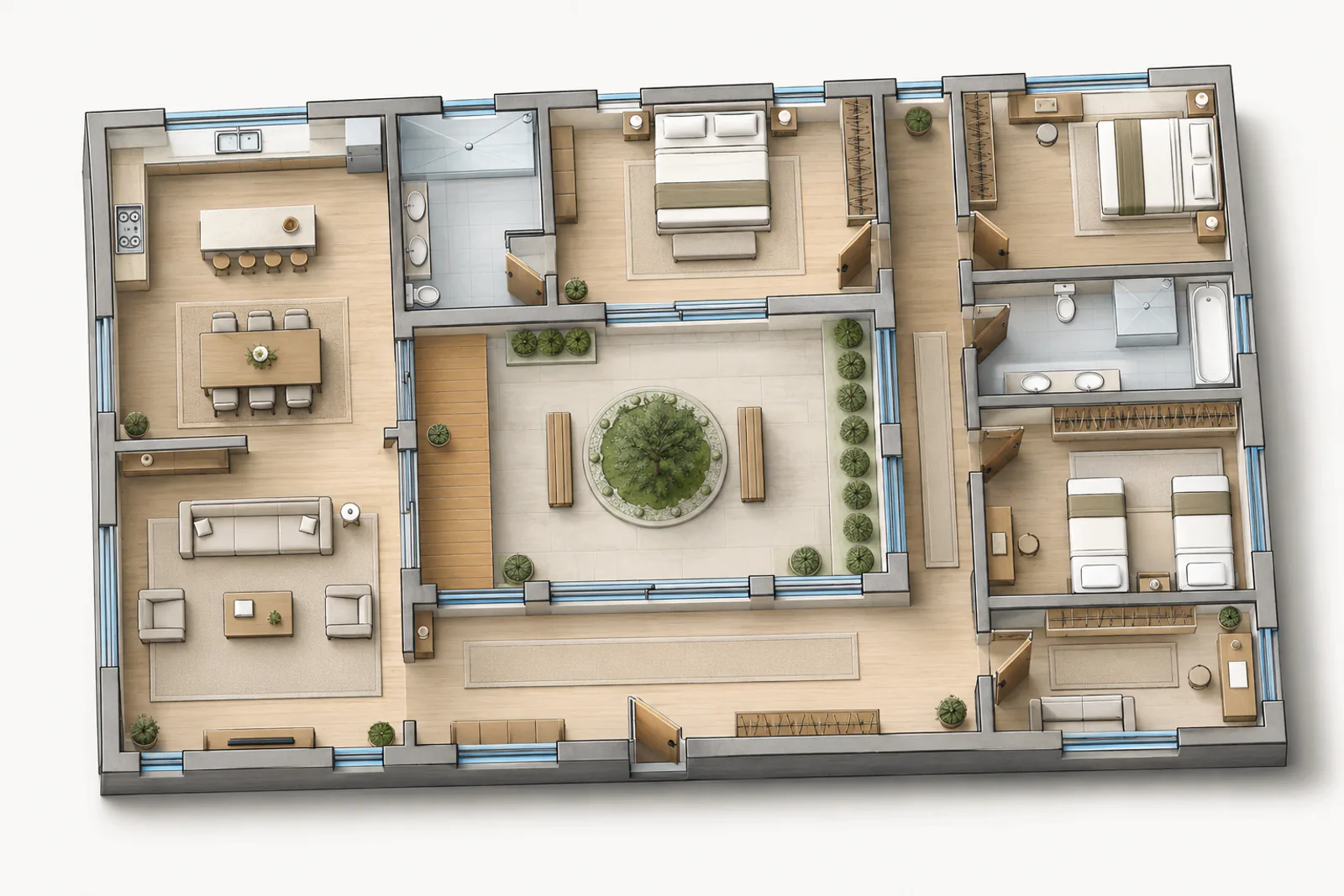
Ejemplo seleccionado, hecho con Vizcraft a partir del plano mostrado. Los resultados varían según el plano que subas. ISO Mapper, ajustes predeterminados.
Los arquitectos necesitan imágenes que cuenten una historia: un concepto claro, una paleta de materiales convincente y una idea de cómo vive el proyecto en su contexto. Los flujos de render tradicionales pueden frenar la exploración del diseño, sobre todo cuando cada revisión obliga a pasarle el trabajo a un especialista. Vizcraft ayuda a los estudios a dar vida a sus ideas con rapidez, para que el equipo dedique más tiempo al diseño y menos a la producción.
Ya sea que presentes un anteproyecto, desarrolles el proyecto o prepares la entrega de un concurso, Vizcraft acelera el ciclo de visualización. Convierte un plano en un isométrico 3D, rediseña el exterior de un edificio existente a partir de una foto para probar direcciones de materiales y renderiza habitaciones desde el plano para comunicar la experiencia espacial desde el principio. El resultado: más iteraciones y mejores decisiones en cada etapa.
Por qué los equipos de arquitectura usan Vizcraft
Exploración de conceptos más rápida
Itera rápido para comparar tratamientos de fachada y atmósferas. Estudio de Exteriores rediseña una fachada a partir de una sola foto, y Diseño Interior renderiza las habitaciones de un plano en el estilo que elijas, para que pruebes el ambiente de un espacio sin reconstruir una escena completa cada vez.
Comunicación clara con los clientes
Traduce los planos en imágenes que clientes y partes interesadas entienden. ISO Mapper ofrece una visión espacial de conjunto, y los renders de interiores hacen tangibles las decisiones de diseño.
Entregas de concurso a escala
Prepara imágenes de concurso convincentes sin ampliar el equipo ni incumplir plazos. Mantén los conceptos alineados con el relato del proyecto incluso cuando el tiempo apremia.
Coherencia de diseño entre disciplinas
Mantén una paleta coherente mientras la arquitectura y los interiores evolucionan. Unos criterios visuales compartidos ayudan a alinear a los consultores y a mantener las aprobaciones en marcha.
Apoyo visual durante todo el ciclo del proyecto
En las primeras fases, los equipos pueden pasar rápido de bocetos y planos a presentaciones coherentes. Con Vizcraft, una presentación de concepto puede incluir rediseños exteriores de edificios existentes, renders de habitaciones e isométricos de planta que aclaran cómo funciona el edificio. Esa claridad temprana reduce los malentendidos y acelera las aprobaciones del cliente.
A medida que el diseño avanza hacia el desarrollo, la visualización se centra en los materiales y la experiencia. Diseño Interior ayuda a los equipos a explorar acabados y mobiliario sin necesidad de bibliotecas de recursos detalladas: renderiza las habitaciones del plano en uno de diez estilos, vuelve a generarlas en otro y muestra cómo se lee cada habitación dentro del plano completo. Esta flexibilidad permite decidir con más seguridad antes de la documentación.
Cuando el proyecto llega a las aprobaciones y al marketing, el mismo flujo de trabajo puede ofrecer imágenes cuidadas para reuniones públicas, captación de financiamiento y presentaciones a desarrolladores inmobiliarios. Como la plataforma es rápida, los equipos pueden responder a los comentarios enseguida y mostrar alternativas sin reabrir todo un proceso de render.
Seguridad en el diseño gracias a la iteración
La arquitectura se nutre de la iteración. El reto es que iterar sea lo bastante asequible y rápido como para hacerlo pronto. Vizcraft permite a los equipos de proyecto explorar opciones sin dedicar tiempo a renders pesados ni pagar externalizaciones costosas. Eso se traduce en más opciones en las reuniones de revisión y más argumentos detrás de cada decisión de diseño.
Usa Estudio de Exteriores para probar la intención de la fachada, ISO Mapper para explicar las circulaciones y Diseño Interior para validar los supuestos del programa. La plataforma favorece un flujo de trabajo basado en hipótesis: prueba un concepto, recoge comentarios y refínalo rápido. Así los estudios entregan mejores proyectos sin descontrolar presupuestos ni plazos.
Alinear a las partes interesadas más allá del equipo de diseño
Los proyectos de arquitectura suelen necesitar el respaldo de propietarios, juntas vecinales, organismos de planificación o la dirección interna. Saber comunicarse con claridad con interlocutores no técnicos puede decidir si un proyecto avanza o se estanca. Vizcraft te ayuda a crear imágenes fáciles de leer, fieles a la intención del diseño y coherentes para cada público. Eso hace más productivas las reuniones públicas y reduce el tiempo dedicado a explicar los planos a posteriori.
Al mantener un relato visual coherente, los equipos pueden destacar los beneficios clave, como la luz natural, la accesibilidad, la integración en el barrio o la claridad del programa, sin abrumar a quien mira. La plataforma también ayuda a los equipos internos a alinearse pronto, para que los consultores de ingeniería y de costos trabajen sobre una visión arquitectónica compartida.
Entregables habituales de arquitectura
- Isométricos de planta para alinear a clientes y partes interesadas.
- Estudios de fachada con paletas de materiales alternativas.
- Perspectivas interiores que explican la experiencia espacial.
- Renders de habitaciones a partir de un plano en dos estilos para revisiones de diseño.
- Láminas de concurso coherentes en todas las escenas.
Un flujo de trabajo que respeta el rigor arquitectónico
Vizcraft no sustituye el proceso arquitectónico; lo acelera. Puedes partir de planos de confianza, exportaciones de CAD o imágenes de referencia y usarlos como base de cada imagen. Así las imágenes se mantienen fieles a tus planos mientras el equipo se centra en el relato y la atmósfera. Como generar imágenes es fácil, puedes dedicar el tiempo a la conversación sobre el diseño en lugar de justificar retrasos.
Al final, la arquitectura consiste en convencer a las personas de una visión. Vizcraft te ayuda a presentar esa visión con claridad, rapidez y coherencia en cada fase del proyecto.
Da vida a tus ideas de arquitectura más rápido
Crea una cuenta gratuita de Vizcraft y agiliza tu próxima presentación, concurso o revisión con el cliente.